

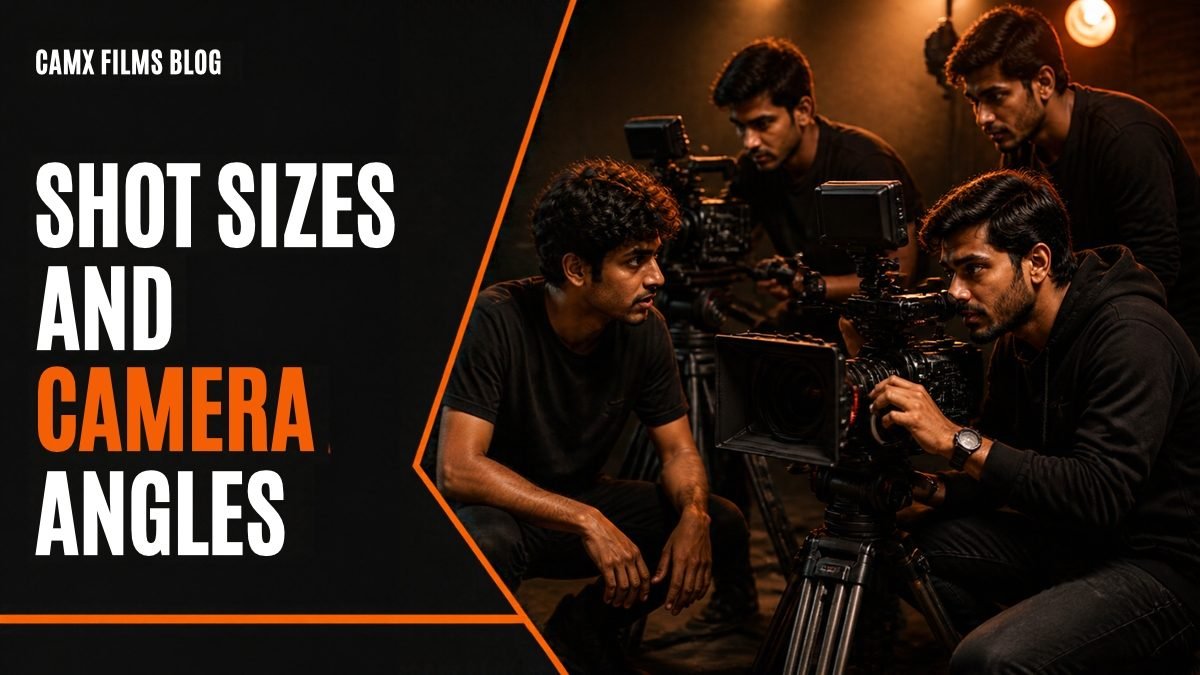
Every shot in a film is a choice. The size of the frame and the angle of the camera tell the audience where to look and how to feel. Understanding shot sizes and angles is the foundation of cinematography.
Basic shot sizes
- Extreme wide shot: shows a big location and sets the scene.
- Wide shot: shows the full body and surroundings.
- Medium shot: from the waist up, good for conversations.
- Close-up: the face, for emotion.
- Extreme close-up: a detail like eyes or hands.
Camera angles
An eye-level shot feels neutral and natural. A low angle, looking up, can make a character look powerful. A high angle, looking down, can make them look small or vulnerable. A Dutch tilt creates unease.
Movement adds meaning
A slow push-in can increase tension, a tracking shot can follow a character through a space, and a handheld camera can feel urgent and real. Every movement should have a story reason.
Coverage for editing
Directors usually shoot a scene in several sizes – a wide master, medium shots and close-ups – so the editor can build rhythm and emphasis. Planning coverage saves time and gives more choices later.
Practise with your phone
Film the same short scene in five different shot sizes and three angles. Edit them together in different ways and notice how the meaning changes. This exercise trains your eye faster than theory.
Lens choice matters too
The same shot size looks different on different lenses. A wide lens close to an actor exaggerates space and can feel uneasy, while a longer lens from a distance compresses the background and feels intimate. Experiment with lens choices to see how they change the mood of a scene.
Related Reading
Key Takeaways
- Shot size controls how close the audience feels.
- Camera angle changes power and mood.
- Shoot coverage so the editor has choices.
Frequently Asked Questions
Which shot is best for emotion?
Close-ups usually show emotion most clearly.
What is a master shot?
A wide shot that covers the whole scene from start to finish.
Can I learn cinematography with a phone?
Yes. Composition and angles can be practised with any camera.
Learn professional camera language in the CAMX FILMS cinematography course in Ludhiana. Explore the course details, visit our studio at SCF 28-F, BRS Nagar, Ludhiana, or contact our team to find the right batch for you.

Leave a Reply