

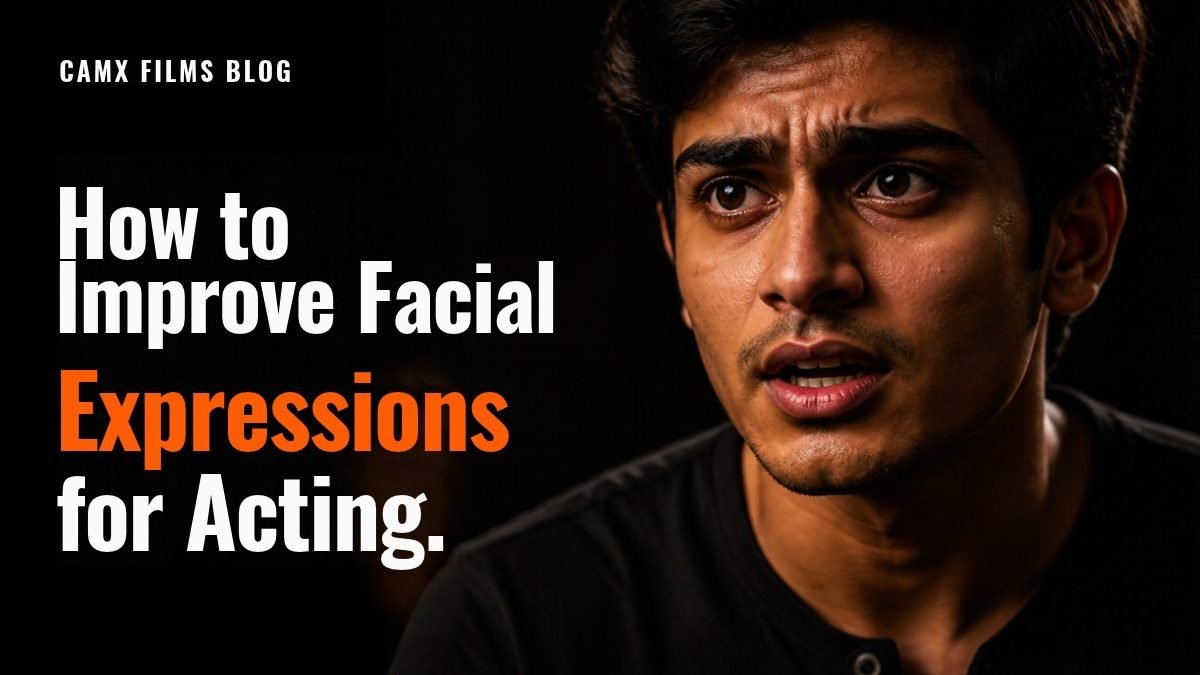
Directors often say, “I can see you acting.” Usually that means the face is doing too much or too little. Great screen expressions are not made by moving your eyebrows – they come from what you are thinking and feeling in the moment.

Think, don’t pull faces
The camera reads thoughts through your eyes. If you truly think “I don’t trust this person”, your face will show it in tiny, believable ways. Before every line, know exactly what your character wants and what they are thinking.
Exercise 1: The thought swap
Sit in front of your phone camera. Look at the lens and silently think three different thoughts – “I miss you”, “I’m angry with you”, “I’m proud of you” – holding each for ten seconds. Watch the playback. You will see the difference without making any “expression” at all.
Exercise 2: Observe real people
Watch how people react at a bus stop, in a market or on a phone call. Notice how little the face moves when someone is upset in public. Copy these real reactions in your practice.
Exercise 3: Relax your face
Tension kills expression. Before a scene, massage your jaw, yawn widely and roll your shoulders. A relaxed face responds naturally to thoughts.
Exercise 4: Emotional range ladder
Take one emotion, like happiness, and play it at five levels – from a private smile to open laughter. This trains control so you can match what the shot needs.
Adjust to the frame
In a wide shot, your body tells the story. In a close-up, even a blink matters. Ask the camera operator about the frame size and adjust.
Related Reading
Key Takeaways
- Truthful expressions come from the character's thoughts, not from moving your face.
- Practise on camera daily and watch your takes critically.
- Relax your face and adjust the size of your reactions to the shot size.
Frequently Asked Questions
Should I practise expressions in front of a mirror?
Mirror work can help with awareness, but practising on camera is better because that is how the audience will see you.
Why do my expressions look fake?
Usually because you are trying to show an emotion instead of thinking the character's thoughts. Focus on the thought and the face will follow.
How long does it take to improve?
With daily practice and feedback, most beginners see clear improvement within a few weeks.
Want expert feedback on your expressions? Our acting course in Ludhiana records every scene so you can see and improve your work. Get in touch for a demo class.

Leave a Reply