

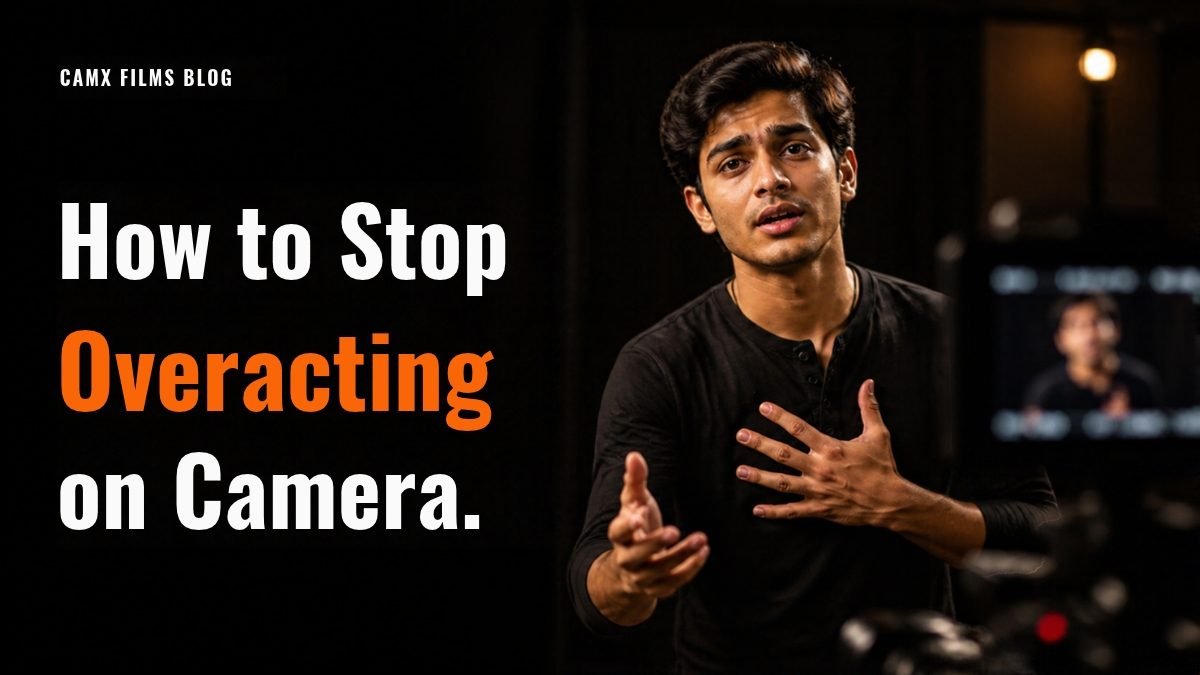
“Tone it down” is probably the most common direction new actors get on set. Overacting happens when we try to show emotions instead of simply experiencing them. The camera magnifies everything, so what feels “normal” to you can look exaggerated on screen.
Why actors overact
- Fear that the emotion won’t be visible.
- Stage habits carried onto a film set.
- Copying exaggerated TV performances.
- Not trusting the camera or the edit.
Trust the camera
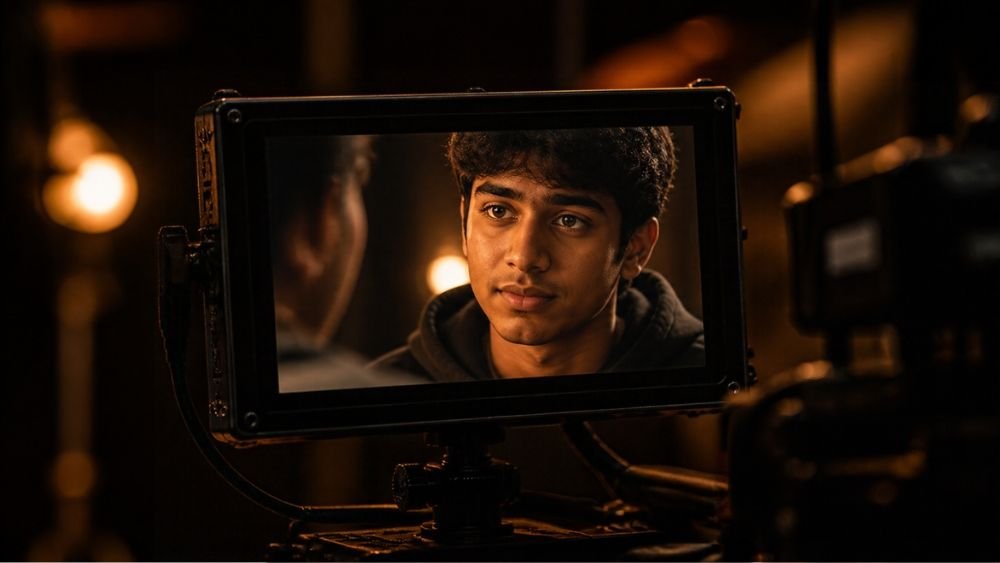
A close-up captures the smallest flicker in your eyes. You don’t need to push. If you are truly thinking the character’s thought, the camera will find it.
Play the action, not the emotion
Instead of “I must look sad”, try “I want her to stay”. Emotions come as a result of pursuing what you want. This one change fixes most overacting.
Reduce, then reduce again
Try a take at full energy, then at half, then at a quarter. Watch all three. Most actors are surprised that the smallest version is the most powerful.
Keep still
Constant head movements and hand gestures distract the viewer. Stillness draws the audience in. Move only when the character has a reason to move.
Watch yourself back
Record scenes on your phone and watch them with the sound off. If you can understand the scene without words and it still looks real, you are on the right track.
Related Reading
Key Takeaways
- The camera magnifies everything, so trust it and reduce.
- Play what the character wants rather than trying to show an emotion.
- Stillness and watching your own takes are powerful correction tools.
Frequently Asked Questions
Is stage acting the same as overacting?
No. Stage acting is sized for a large space. It only looks like overacting when the same size is used in a close-up on camera.
How can I tell if I'm overacting?
Watch your takes with the sound off. If the reactions look bigger than real life, reduce.
Can underacting be a problem too?
Yes. Being too flat is also a problem. The goal is truthful thinking that the camera can read.
Our acting course in Ludhiana trains you on camera every week, with playback and coaching to help you find a natural screen performance. Book a demo class.

Leave a Reply