

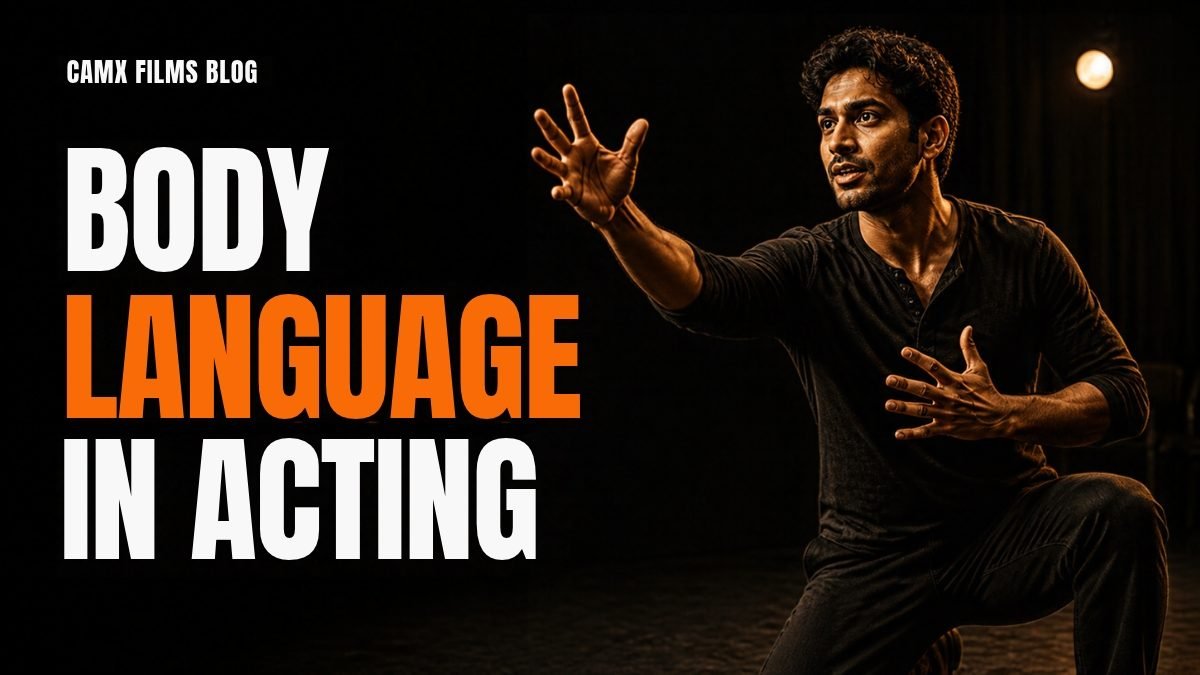
Audiences understand a character’s body before they hear a word. A slumped back, a nervous hand, a slow walk – these tell the story instantly. Body language is one of the most powerful and most overlooked tools in acting.

Start with neutral
Before you can build a character’s body, you need to find your own neutral posture: feet under hips, shoulders relaxed, head balanced. From neutral, every choice becomes clear and intentional.
Posture tells status
High-status characters often take up space, move slowly and hold eye contact. Low-status characters may shrink, fidget and look away. Play with these to show power shifts in a scene.
Find the character’s centre
Some characters lead with the chest (proud), others with the head (thinking), the stomach (comfortable) or the knees (tired). Try walking around the room leading with different body parts.
Gestures with purpose
Random hand movements distract. Every gesture should come from a thought or need. If you don’t know what to do with your hands, let them rest.
Listen with your body
When the other actor speaks, your body should react – leaning in, turning away, freezing. Listening is visible.
Adjust for the frame
In a wide shot, your full body tells the story. In a close-up, small shifts in your shoulders and head matter more.
Practise through observation
Watch how people sit at a dhaba, wait at a bus stop or walk into an office. Real life is your best teacher.
Use animals and objects for inspiration
A classic actor exercise is to observe an animal – a cat, a tiger, a bird – and borrow its rhythm for a character. Others imagine their character made of a material, like iron or silk. These playful images free your body from your own habits and help you find movements that feel fresh and specific to the role.
Key Takeaways
- Start from a relaxed, neutral posture and build the character from there.
- Posture and use of space show a character's status and feelings.
- Every gesture should have a reason, and listening should be visible in your body.
Frequently Asked Questions
How do I know what to do with my hands?
If there is no reason to move them, let them rest. Gestures should come from the character's thoughts.
Can body language show a character's status?
Yes. Posture, use of space and eye contact clearly show power or insecurity.
How do I practise body language?
Observe real people, try walking as different characters and record yourself on camera.
Explore movement and character work in our theatre acting course and acting course at CAMX FILMS, Ludhiana.

Leave a Reply